Glyco Vista Ingredients: What We Know, What We Don't, and What to Check
A practical ingredient guide based on the supplied Glyco Vista product creatives. This page separates product-specific information from general ingredient research so readers can avoid confusing “ingredient evidence” with proof about a finished supplement.
Important formula note
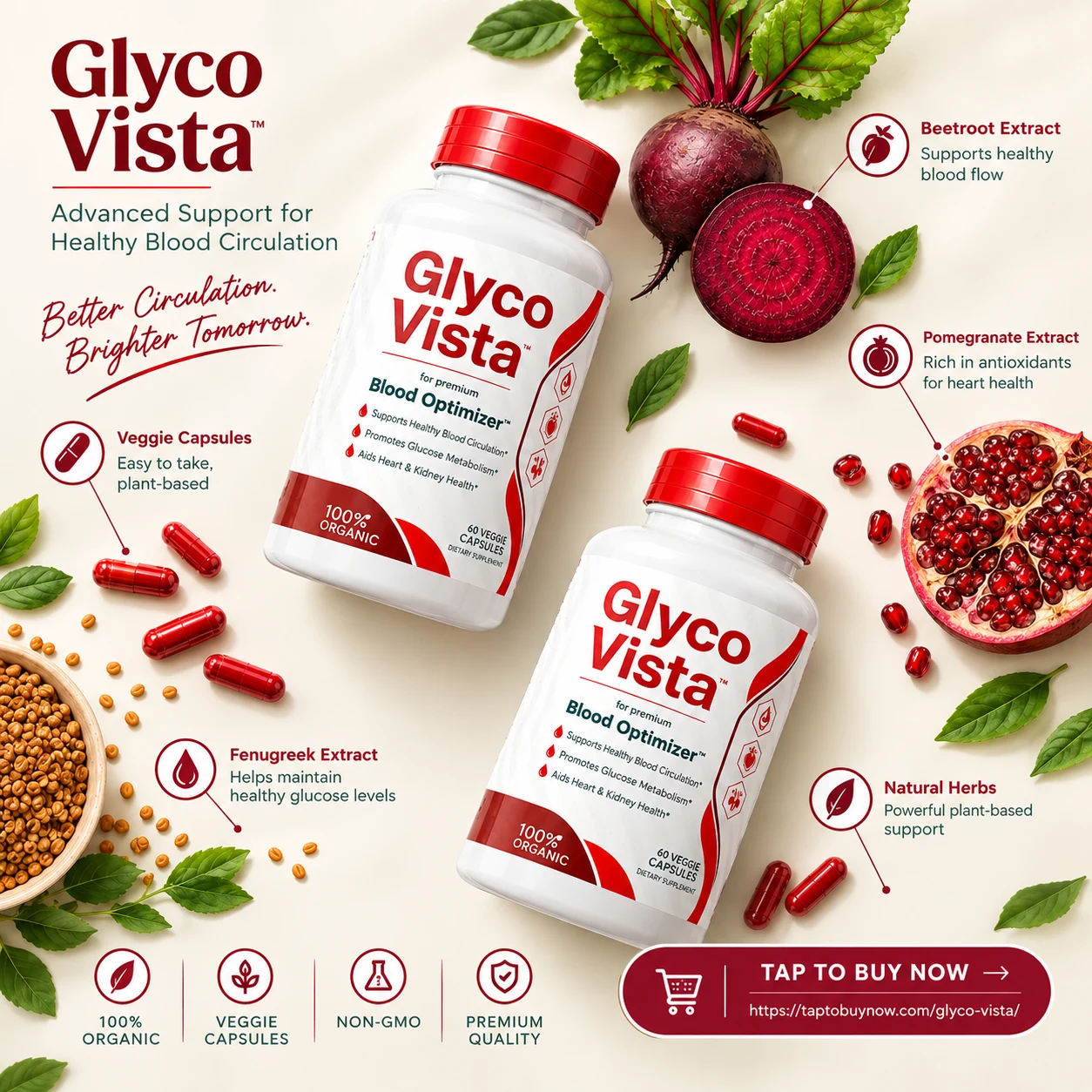
The supplied materials identify beetroot extract, pomegranate extract, fenugreek extract and natural herbs. They do not provide ingredient amounts, extract ratios, standardization details or a complete Supplement Facts panel. For that reason, this page does not invent dosages.
1. Beetroot extract
Beetroot is a familiar food ingredient and is also used in dietary supplements. It naturally contains nitrate, which can participate in nitric-oxide-related pathways. Human research has examined beetroot and nitrate in areas such as exercise performance and vascular function, but results depend on the form, dose, population and outcome being studied.
For Glyco Vista specifically, the important limitation is that the supplied product material does not tell us how much beetroot extract is in each serving or what extraction/standardization method is used. Therefore, general beetroot research should be treated as background information rather than proof of a specific Glyco Vista effect.
2. Pomegranate extract
Pomegranate is rich in naturally occurring polyphenolic compounds and has been studied in nutrition and cardiovascular-health research. Pomegranate products vary substantially in composition depending on whether they use juice, fruit, peel, seed material or a concentrated extract.
That distinction matters when reading a supplement label. A label that simply says “pomegranate extract” does not, by itself, tell a shopper the concentration or the amount of the relevant compounds. Those details should be checked on the current bottle before making a strong comparison with another supplement.
3. Fenugreek extract
Fenugreek is a plant traditionally used in food and herbal preparations. Research has explored fenugreek in relation to glucose and metabolic measures, among other topics. Study quality, preparation, dose and population vary, so it is not appropriate to convert an ingredient-level research finding into a guaranteed outcome for a commercial supplement.
The supplied Glyco Vista material does not specify the amount of fenugreek extract per serving. That missing detail is one of the reasons we recommend checking the current label before purchase.
4. “Natural herbs”
The phrase “natural herbs” appears in the supplied creative, but it is not a complete ingredient disclosure. It does not identify which herbs are included or how much of each is present. A responsible review should not turn a broad marketing phrase into a made-up ingredient list.
How to evaluate a supplement label
Why we don't publish invented dosages
FDA consumer guidance notes that dietary supplement labels generally include a Supplement Facts panel with serving size, number of servings per container, dietary ingredients and applicable amounts. When those details are unavailable, presenting an exact dose as fact would create false precision.
Want to check the current Glyco Vista offer?
Use the supplied purchase destination to review the current product presentation, availability and any label information provided there.
View Glyco Vista →